Wednesday, February 11, 2009

Camera Techniques

The Art of COMPOSITION

What makes a good photo?

How can you create an interesting and visually dynamic photograph?

What is Pre-Visualization?

Effective monochrome photography is truly “painting with light”. It is the careful capture and presentation of shapes and tonal ranges of unique subjects (shades of grey from true black to pure white) that work to generate pleasing and unique images. Over and above the subject matter itself, the use of tones can make or break the impact of the image during the viewer’s split second initial assessment of the image.

When a viewer first sees a photograph, there is only a faction of a second before an opinion is formed as to whether they find it appealing or un-appealing, and this opinion is unlikely to change over time. Ultimately the viewer within this extremely short time-period evaluates every thing you do to generate the image.

How do people respond to photographic images and how one can define a truly appealing and memorable B&W image.

How can you as the photographer present a “unique or altered reality” ?
- to generate something people don’t normally see - in order to generate viewer interest and appeal through the uniqueness of subject matter and capturing moments in time that tell a story.

RULE OF THIRDS

http://en.wikipedia.org/wiki/Rule_of_thirds

The rule of thirds is a compositional rule of thumb in visual arts such as painting, photography and design.[1] The rule states that an image should be imagined as divided into nine equal parts by two equally-spaced horizontal lines and two equally-spaced vertical lines, and that important compositional elements should be placed along these lines or their intersections.[2] Proponents of the technique claim that aligning a subject with these points creates more tension, energy and interest in the composition than simply centering the subject would.
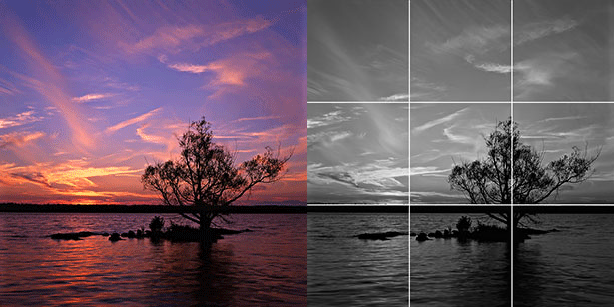
File:Rivertree thirds md.gif

The photograph above demonstrates the application of the rule of thirds. The horizon sits at the horizontal line dividing the lower third of the photo from the upper two-thirds. The tree sits at the intersection of two lines, sometimes called a power point. Points of interest in the photo don't have to actually touch one of these lines to take advantage of the rule of thirds. For example, the brightest part of the sky near the horizon where the sun recently set does not fall directly on one of the lines, but does fall near the intersection of two of the lines, close enough to take advantage of the rule.


You can use the rule of thirds as a guide in the off-center placement of your subjects. Here's how it works.

Grid

Before you snap the picture, imagine your picture area divided into thirds both horizontally and vertically. The intersections of these imaginary lines suggest four options for placing the center of interest for good composition. The option you select depends upon the subject and how you would like that subject to be presented.

Grid superimposed over gull

We picked the upper-right position for this subject so that we could see the full shadow and most of the tracks that lead to the seagull.

Lighthouse

The lighthouse seems well placed in the upper right just because the rest of the scene fits nicely into the format.

Figure on icy pier

Here's a case where you have excellent subject control. You can have the model pose anywhere along the walkway. The rule of thirds indicates this placement which also gives the model a definite path to follow within the picture area.

Figure in tunnel

You should always consider the path of moving subjects and, generally, leave space in front of them into which they can move.

Figure running on beach

If you don't, here's what can happen! This jogger looks like she's going to run right out of the picture.

2nd view of figure running on beach

By placing the subject in the lower-left position, we've used the rule of thirds and given the jogger plenty of room to run within the picture.

X-country skiers

Here's another action shot where it's important to leave more space in front of a moving subject than behind it.

Sailboat on water-horizon middle

You can also apply the rule of thirds guidelines to the placement of the horizon in your photos. Here the center position of the boat and horizon results in a static feeling.

Sailboat on water-horizon upper 3rd

Let's move the horizon to the upper third and the sailboat to the left. Remember, these are the only guidelines. So if you don't like this subject placement, try another.

Sailboat on water-horizon lower 3rd

Like this. We've moved the horizon line to the lower third. In general, place the horizon high or low in your scenics, but rarely in the middle.

2 views of ski lift

Just as it's usually best to place horizons off center, it's also best to place verticals off center. For instance, in the picture on the left, the subject is centered, but on the right, the photographer got a more effective photograph by simply changing the viewpoint.


No comments:

Post a Comment